




Published 30 Aug 2025
API Development
Webtricker's API Development service builds secure REST APIs with OAuth2, integrates booking platforms like Airbnb & VRBO, job portals, payment systems, and cus
Explore our achievements and let yourself beconvinced!
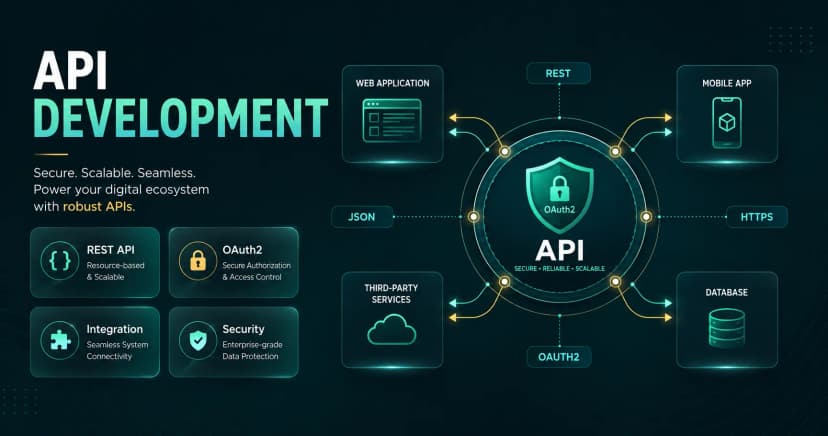
Webtricker's API Development service builds secure REST APIs with OAuth2, integrates booking platforms like Airbnb & VRBO, job portals, payment systems, and cus
API Development
APIs are the infrastructure behind every digital product that loads live data, processes a booking, or connects two systems. Webtricker's API Development service builds and integrates them, REST APIs with OAuth2 security, booking platform connections, job portal integrations, and custom API solutions built around your workflow.
Quick Answer: API Development at Webtricker means designing, building, and integrating application programming interfaces that let different software systems communicate securely and reliably, whether that's a custom REST API from scratch, an OAuth2-authenticated service, or an integration with a third-party platform like Airbnb, VRBO, or Indeed.
Table of Contents:
• What Is API Development and Why Does It Matter?
• What API Development Services Does Webtricker Provide?
• What Industries and Use Cases Does API Development Cover?
• What Should a Well-Built API Actually Look Like?
• Why Choose Webtricker for API Development?
• Frequently Asked Questions
Webtricker's API Development services include:
• Custom REST API development
• OAuth2 authentication and security
• Third-party API integration (booking, job portal, payment, and more)
• API design, documentation, and testing
• Ongoing API maintenance and support
Here's what each of those means in practice, and why getting the architecture right from the start matters more than most clients expect.
What Is API Development and Why Does It Matter?
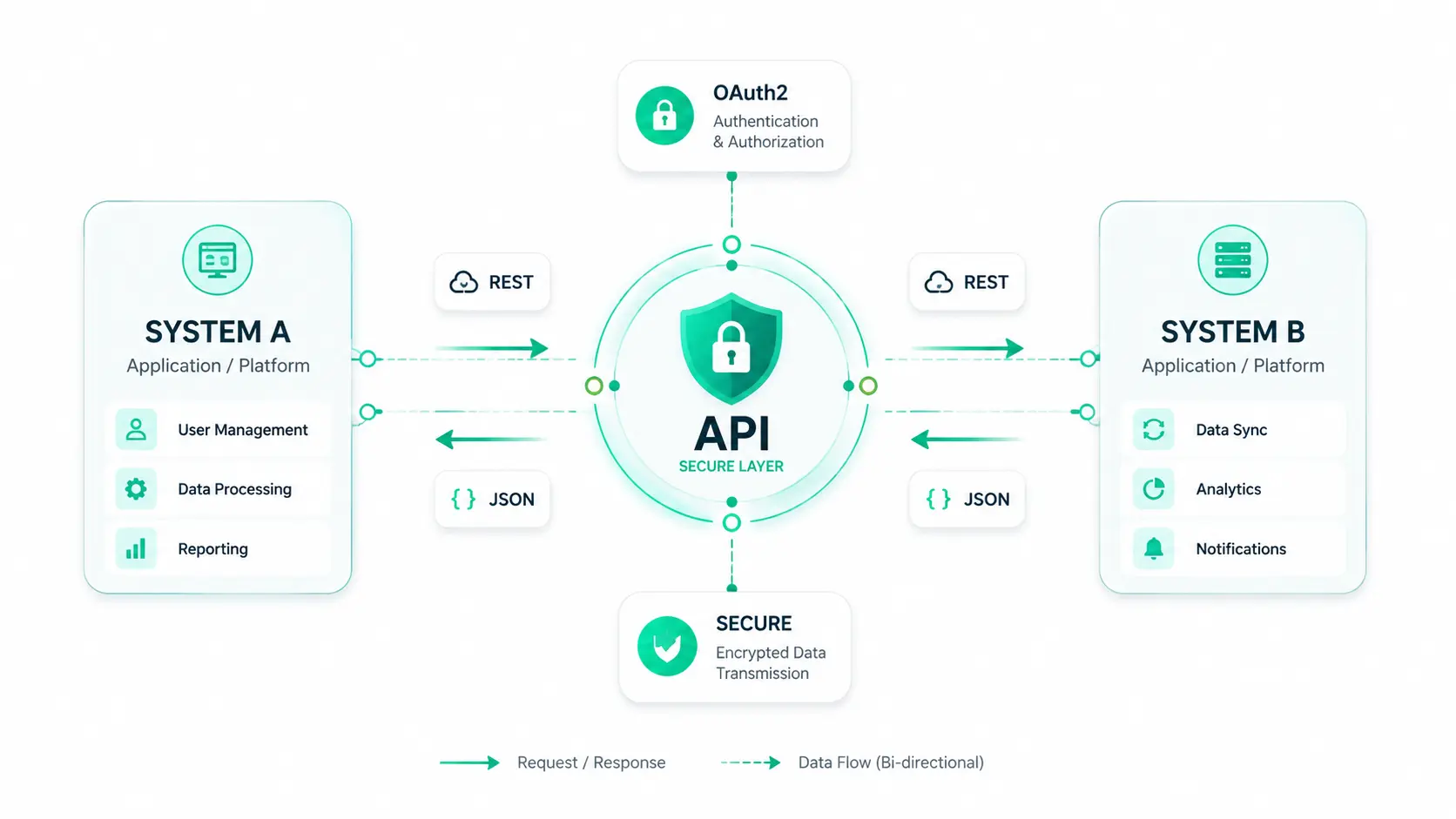
An API, or application programming interface, is a set of rules that lets different software systems communicate with each other. Every time a mobile app loads real-time data, a website processes a booking, or a business system syncs information between two platforms, an API is handling that conversation.
The scale of API reliance across modern software is significant. Roughly 83 percent of businesses use APIs to maximize return on digital assets in 2026, according to market research compiled by SQ Magazine. APIs account for roughly 71 percent of all web traffic globally, and the global API management market is approaching $8 billion in 2026 and growing 25 percent annually, according to Gartner and IDC estimates via ZTABS.
REST, which stands for Representational State Transfer, remains the dominant architecture standard, with 93.4 percent of all web services using RESTful design, according to Nordic APIs market data. When Webtricker builds an API, REST is the default starting point because it's the architecture everything else expects to talk to.
What API Development Services Does Webtricker Provide?
Five services, each covering a different stage or type of API work.
Custom REST API development. Building an API from scratch, designing the endpoints, defining the data structures, writing the logic, and testing across environments, so the output is something other systems can reliably connect to without unexpected behavior. OAuth2 authentication and security. Implementing OAuth2 protocol to control who can access the API and what they can do with it, so authentication is secure by design rather than bolted on afterward. This is standard on any externally accessible API Webtricker builds. Third-party API integration. Connecting an existing application to external platforms by consuming their APIs, whether that's a booking system, a job portal, a payment processor, a mapping service, or any other third-party service that exposes a public or partner API. API design and documentation. Structuring an API so it's intuitive for developers to consume, with clear endpoint naming, consistent data formats, versioning from the start, and documentation that doesn't require a call to understand. Maintenance and support. Monitoring API performance, implementing updates, handling versioning as connected systems change, and resolving integration issues after launch, so the API keeps working as the surrounding ecosystem evolves.
What Industries and Use Cases Does API Development Cover?
APIs show up in almost every industry that involves data moving between systems. A few of the most common types of work:
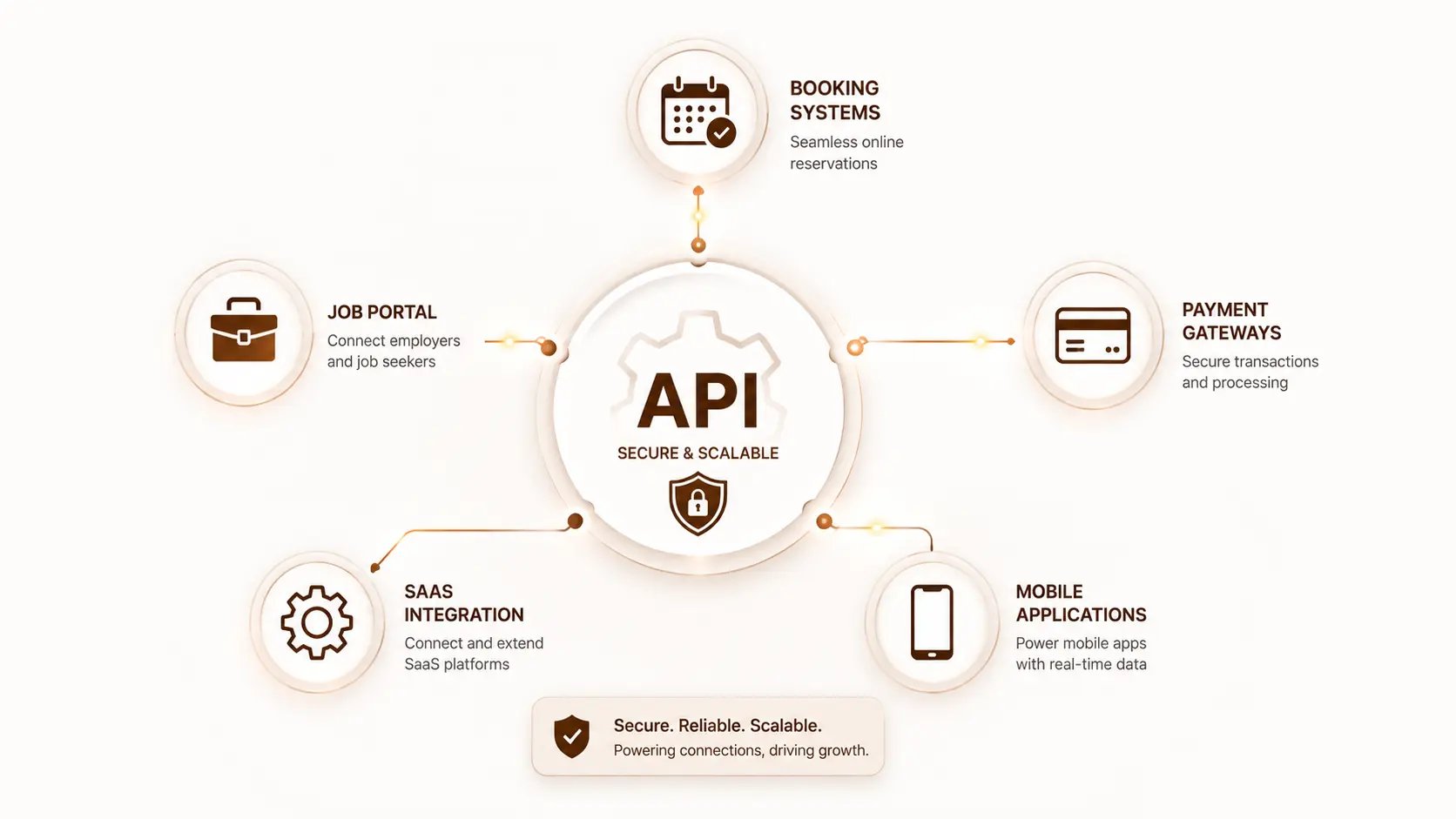
Booking and property management. Integrating booking plugin APIs for property-selling platforms like Airbnb and VRBO, enabling real-time availability, pricing, and reservation data to flow between a property management system and the platforms where listings appear. Job portals and employment platforms. Building or integrating APIs for job portals similar to Indeed, including job posting, application tracking, candidate data, and employer account management through a standardized interface. Payment and commerce. Connecting applications to payment processor APIs, managing transaction flow, handling webhooks for payment confirmation, and securing sensitive financial data through OAuth2 and API key management. SaaS and internal business systems. Building internal APIs that let separate tools in a business's tech stack share data without manual exports, whether that's connecting a CRM to a project management tool or syncing customer data between a marketing platform and an ERP. Mobile and web applications. Building the backend API layer that mobile apps and web frontends call to load data, authenticate users, submit forms, and trigger server-side actions without any direct database exposure.
What Should a Well-Built API Actually Look Like?
A functional API and a well-built API aren't the same thing. The difference usually shows up later.
Secure from the start. Authentication, authorization, rate limiting, and input validation built into the API design from day one, not added when something goes wrong. OAuth2 handles authentication well; the rest is architecture and testing discipline. Consistent and predictable. Endpoint naming, HTTP methods, status codes, and response formats that follow REST conventions, so any developer connecting to the API can understand what to expect without reading every line of documentation. Versioned properly. An API that changes its response structure without warning breaks everything connected to it. Versioning from the first release means the existing integrations keep working when the API evolves. Documented well enough to use without a phone call. Clear documentation covering authentication, every endpoint, its parameters, and example responses, so an integration that Webtricker hands off can be maintained by the client's team.
Why Choose Webtricker for API Development?
Experience with the full API lifecycle. Design, development, security, documentation, and maintenance handled as one continuous engagement rather than separate projects handed off between teams. OAuth2 and REST as standard practice. Every externally accessible API Webtricker builds uses OAuth2 for authentication and follows RESTful conventions, not because it's trendy but because it's what the rest of the ecosystem expects. Integration capability beyond basic connections. Whether the requirement is consuming a complex third-party API, building a custom integration layer between two systems, or designing a new API from scratch, the scope is handled in one place. Clear handoff and ongoing support. APIs don't get built and forgotten. Monitoring, updates, and support for both planned and unplanned changes stay available after launch.
This work pairs naturally with our MERN Stack Development services and our web development services, since a well-built API is the backbone that connects front-end applications to the data and logic they depend on.
Frequently Asked Questions
Q: What is the difference between a REST API and a GraphQL API?
A: REST APIs use fixed endpoints for each resource and are the standard for most web services, with 93 percent adoption across the industry. GraphQL lets the client specify exactly what data it needs in a single request, which can be more efficient for complex data requirements. Webtricker builds primarily REST APIs because they're the most broadly supported architecture, but the right choice depends on the specific use case.
Q: Why does OAuth2 matter for API security?
A: OAuth2 is the industry-standard protocol for access delegation, it controls which systems and users can access an API and what they're permitted to do without exposing credentials directly. Without proper authentication, an API that's accessible over the internet is a security liability regardless of what it does.
Q: Can Webtricker integrate with an API from a platform we don't control?
A: Yes. Integrating with third-party APIs from platforms like Airbnb, VRBO, Indeed, payment processors, or any other service that exposes a partner or public API is a standard part of our API Development work.
Q: How long does API development take?
A: A focused, single-purpose API can be designed, built, and documented in a few weeks. A multi-endpoint API with multiple third-party integrations, complex authentication, and full documentation typically takes longer. The scope and timeline get defined before work starts.
Q: Do you provide API documentation?
A: Yes. Every API Webtricker delivers includes documentation covering authentication, endpoints, parameters, and example responses, written so the client's team can maintain and extend it without a call back to us.
Q: What happens when a third-party API we integrate with changes?
A: Third-party API changes are handled as part of ongoing support. When an external platform updates its API, it breaks the integration at the connection point, not silently, so it gets caught quickly, and our support engagement covers the update work.
Build an API That the Rest of Your Stack Can Actually Rely On
A poorly designed API creates downstream problems in every system connected to it. Webtricker's API Development service builds from the architecture up, REST conventions, OAuth2 security, proper versioning, and real documentation, so the API that ships is one worth integrating with.