

Published 24 Jul 2024
What Is Web Design? Everything You Need to Know
Want to know what is web design? Discover the core principles, processes, and future trends that make websites successful. Get a free site audit!
What Is Web Design? Everything You Need to Know
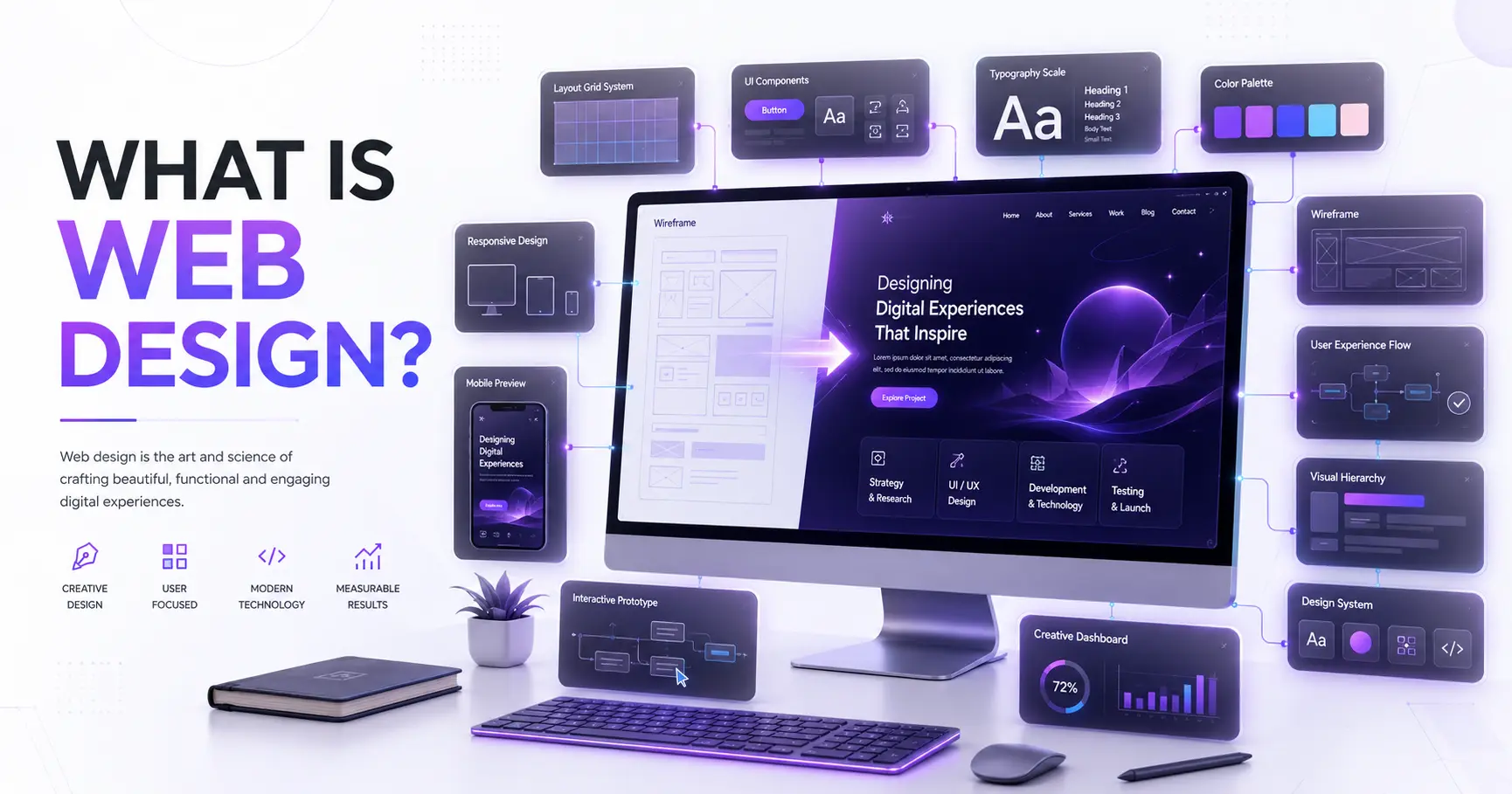
Understanding what is web design is the first step to building a successful online presence. It goes far beyond making things look pretty—it’s about creating digital experiences that actually work for your audience.
Quick Answer: Web design is the process of planning, creating, and maintaining the visual and functional aspects of a website. It combines layout, graphics, and user experience principles to ensure a site is both beautiful and easy to use.
Whether you're building a personal blog or a massive eCommerce empire, the foundation always comes back to solid design. Let's break down exactly what this discipline entails and why it matters so much.
Why Is Knowing What Is Web Design Critical for Businesses?
Your website is usually the very first interaction a potential customer has with your brand. If it’s confusing, slow, or visually dated, you lose credibility in an instant.
First impressions are made in milliseconds. Research from the Nielsen Norman Group shows that users often leave a web page in just 10 to 20 seconds. If they don't immediately understand what you do and how to navigate your site, they won't stick around to figure it out.
But good design does more than just look nice. It directly impacts your bottom line. A well-structured site guides visitors toward your goals—whether that’s buying a product, signing up for a newsletter, or booking a consultation.
Furthermore, search engines like Google factor user experience into their rankings. Sites with poor mobile layouts, slow load times, or confusing navigation get penalized. When you invest in understanding what is web design, you are directly investing in your SEO visibility and revenue.
What Are the Core Principles of Good Web Design?
Visual appeal without structure is just art. To be effective, design needs to follow foundational principles that guide the user's eye and create a sense of order.
Balance and Alignment: Think of your webpage as a physical space. You wouldn't put all your heavy furniture in one corner. Visual balance ensures elements are distributed evenly, creating a stable, professional look. Alignment keeps everything neatly organized so the page feels intentional rather than chaotic.
Contrast: Contrast is what makes things readable. Using light text on a dark background—or vice versa—ensures visitors don't have to squint. It’s also a powerful tool for creating a visual hierarchy, telling the user’s brain what to look at first.
The Power of White Space: Also known as negative space, white space is the empty area around elements. Novice designers often try to fill every pixel, but breathing room is crucial. White space reduces cognitive overload and makes your core content pop.
Consistency: Your colors, fonts, and button styles should remain consistent across every page. This repetition builds familiarity, which in turn builds trust.
When these principles work together, the user doesn't even notice the design—they just notice that the site feels "right."
How Does the Web Design Process Actually Work?
Designing a website isn't just opening a software tool and pushing pixels around. It’s a strategic process that requires planning and iteration.
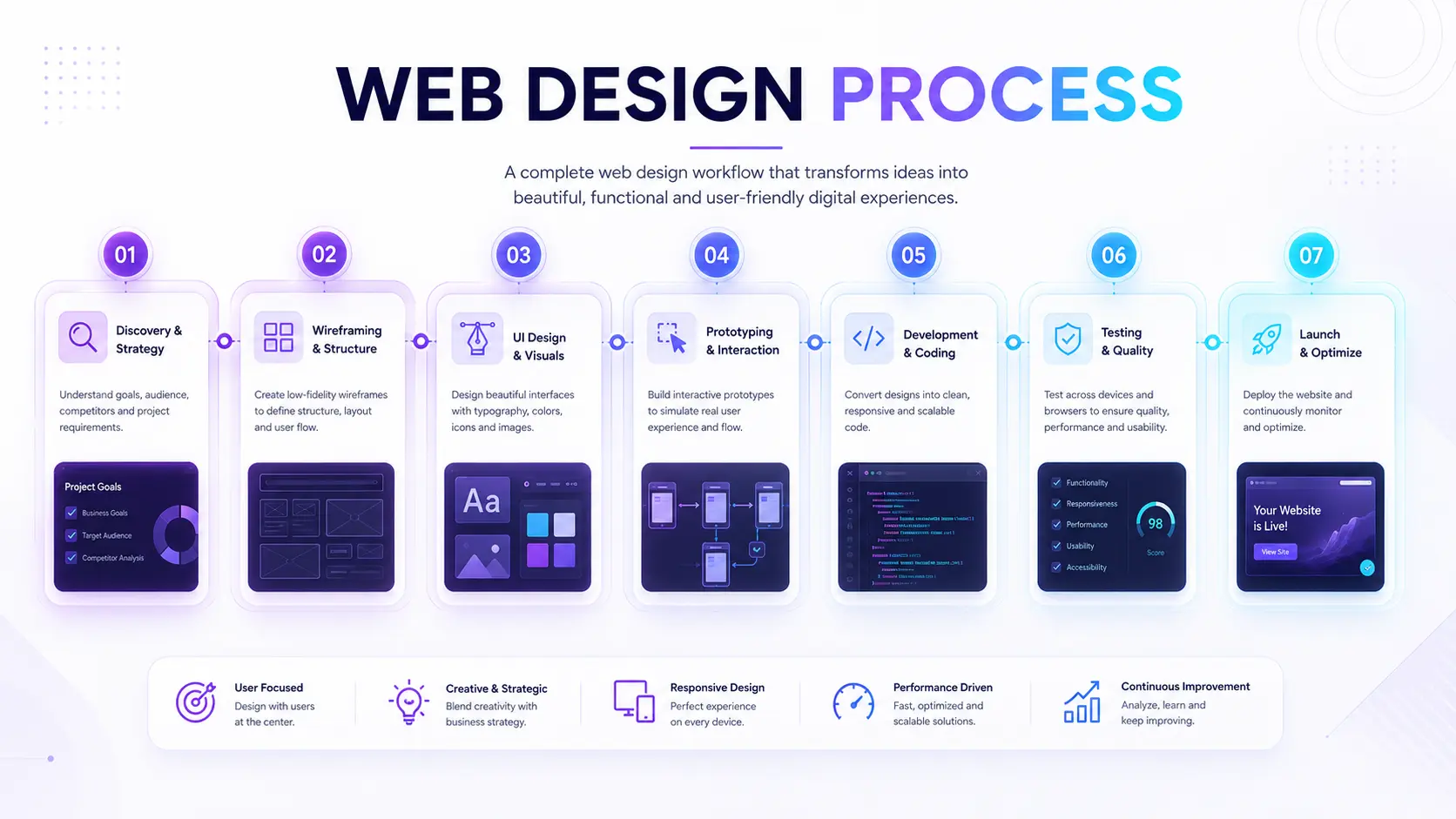
1. Discovery and Strategy: Before a single wireframe is drawn, you need to define the site’s purpose. Who is the target audience? What are the primary business goals? This phase sets the roadmap for everything that follows.
2. Wireframing: This is the skeleton of your website. Wireframes are low-fidelity layouts that map out where elements like headers, text blocks, and images will go, without getting distracted by colors or fonts.
3. Visual Design: This is where the magic happens. Designers take the wireframes and apply the brand's color palette, typography, and imagery to create high-fidelity mockups of what the final site will look like.
4. Development: The visual designs are handed off to developers (or translated into code by the designer) using HTML, CSS, and JavaScript. This is where static images become interactive, clickable websites. For complex projects, businesses often partner with custom web development services to ensure the code is as clean as the design.
5. Testing and Launch: Before going live, the site is rigorously tested on different browsers and devices. Broken links, slow load times, and mobile rendering issues are ironed out.
What Essential Elements Make a Website Effective?
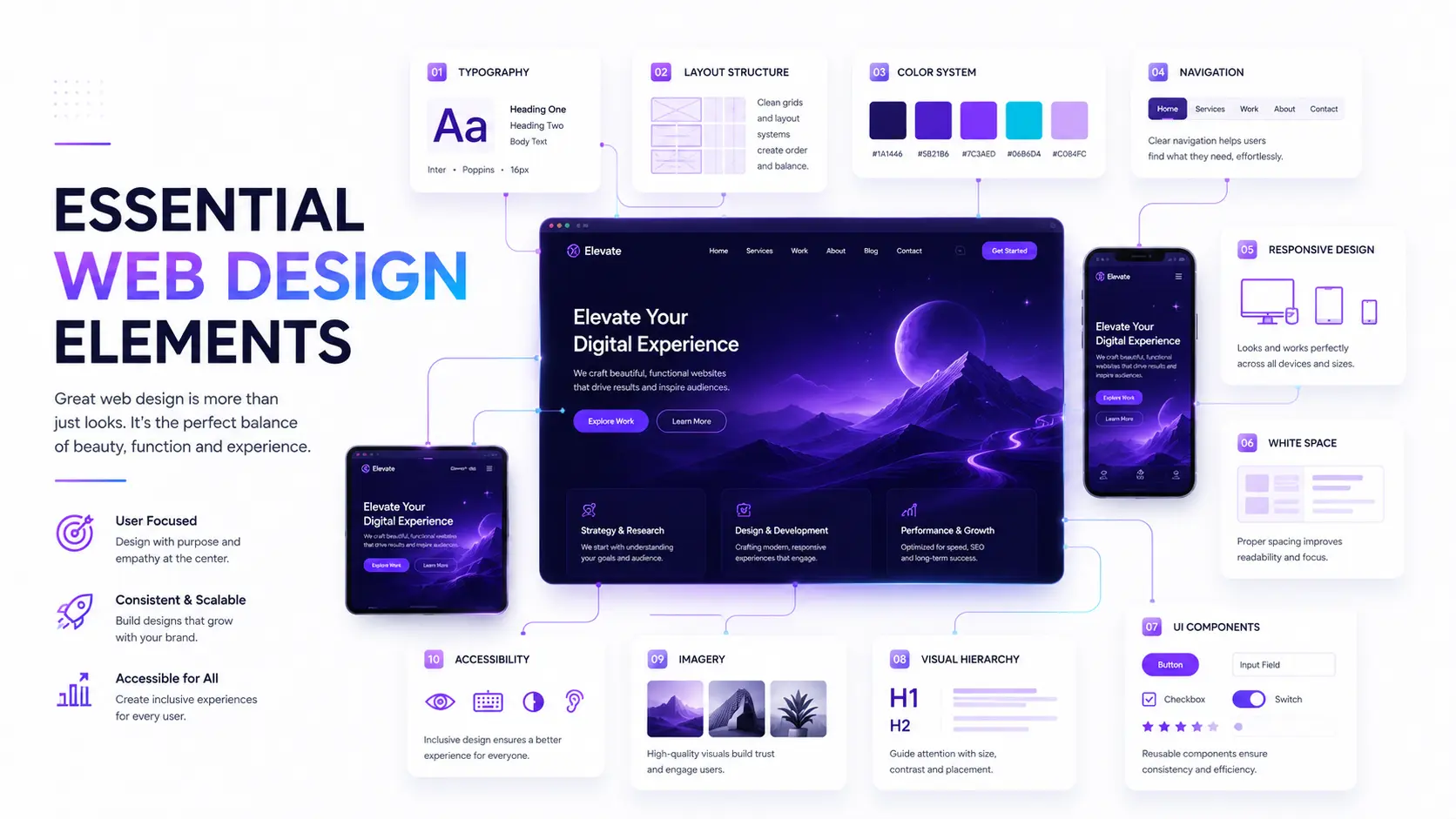
If you strip away the flashy animations and trendy graphics, what’s left? The essential building blocks that actually make a website function.
Layout Structure: The layout is the framework. It dictates how content is organized on the page. A good layout uses visual cues to guide the user naturally from the top of the page down to the call-to-action.
Typography: Fonts do a lot of heavy lifting. They set the entire tone of your brand—whether that’s authoritative and corporate, or playful and creative. More importantly, typography must be highly legible across all screen sizes.
Imagery: Humans process visual data much faster than text. High-quality, relevant images break up text, illustrate complex ideas, and evoke emotion. But they must be properly compressed so they don’t destroy your page load speed.
Navigation: If users can’t find it, it doesn’t exist. Navigation menus should be intuitive, clearly labeled, and logically grouped. If a user has to hunt for your contact page, the design has failed.
Responsive Adaptability: With over 55% of global web traffic now coming from mobile devices, a site that doesn't adapt to different screen sizes is virtually useless. Responsive design ensures your layout automatically reshuffles itself to look perfect on a phone, tablet, or desktop.
How Do Design and Development Differ?
This is one of the most common points of confusion in the digital world. People often use "web design" and "web development" interchangeably, but they are two distinct disciplines.
Web design focuses on the front-facing user experience. It’s about aesthetics, flow, branding, and usability. A designer asks: Does this look good? Is it easy to use? Does it evoke the right emotion? They use tools like Figma, Adobe XD, or Sketch to create visual blueprints.
Web development focuses on building the actual structure. Developers take those blueprints and bring them to life using code. Front-end developers write HTML, CSS, and JavaScript to build what you actually see and interact with. Back-end developers work with servers, databases, and complex logic that powers things like user logins and payment processing.
Think of it like building a house. The designer is the architect who draws up the beautiful, functional floor plans. The developer is the construction crew that actually builds it so it doesn't fall down. Both are essential, but they require very different skill sets.
What Does the Future Hold for What Is Web Design?
Web design is never static. As technology evolves, so do user expectations. Staying ahead of the curve is what separates good digital products from great ones.
AI-Driven Personalization: Artificial intelligence is shifting websites from static brochures to dynamic experiences. Imagine a website that automatically rearranges its layout and content based on whether the visitor is a returning customer or a first-time browser. AI is making this level of personalization scalable.
Immersive Technologies (AR/VR): Augmented and virtual reality are moving beyond gaming. For eCommerce, allowing customers to virtually "place" furniture in their living room or try on clothes digitally is becoming a massive design frontier.
Voice User Interfaces (VUI): With the rise of smart speakers, designing for voice search is no longer optional. This means structuring content in a highly conversational, question-and-answer format so search engines can easily parse it.
Extreme Accessibility: Accessibility is transitioning from a compliance checklist to a core design philosophy. Designing for inclusivity—ensuring screen readers can navigate your site perfectly, or that colorblind users can read your text—is becoming the standard, not the exception.
Investing in these forward-thinking design practices pays off. According to Forrester Research, every $1 invested in user experience design can yield a return between $2 and $100. Good design isn't an expense; it's a high-yield investment.
Frequently Asked Questions
What is web design in simple terms?
Web design is the process of creating the visual look, layout, and overall feel of a website. It focuses on making sure the site is aesthetically pleasing, easy to navigate, and accessible to all users.
Do I need to know how to code to design a website?
No. While understanding basic HTML and CSS can be incredibly helpful, many modern web designers use visual drag-and-drop tools and prototyping software to create stunning websites without writing a single line of code.
What is the difference between UI and UX in web design?
UI (User Interface) refers to the actual visual elements users interact with—buttons, icons, spacing, and colors. UX (User Experience) is the broader process of ensuring the overall journey through the site is logical, smooth, and frustration-free.
How long does it take to design a website?
A standard professional website typically takes 4 to 8 weeks to design and develop. Complex sites with custom animations, eCommerce functionality, or extensive web applications can take several months.
What tools do professional web designers use?
Professionals typically use dedicated UI/UX software like Figma, Sketch, or Adobe XD for creating layouts and prototypes. For building the actual site, they may use CMS platforms, custom code, or website builders depending on the project scope.
Why is mobile responsiveness so important in web design?
Because the majority of internet users access the web via mobile devices. If your site isn't responsive, it will look broken or be incredibly hard to use on a phone, leading to high bounce rates and lost revenue.
Great Design Is the Foundation of Digital Success
At its core, understanding what is web design means understanding how humans interact with digital information. It’s a delicate balance of art and psychology, aesthetics and functionality.
A beautiful website that is impossible to navigate will fail. A highly functional site that looks like it was built decades ago will also fail. The sweet spot lies in creating seamless, intuitive, and visually compelling experiences that guide users exactly where they want to go.
Whether you are planning to tackle your site in-house or hire professionals, knowing these principles ensures you make informed decisions that will benefit your brand for years to come.
Get a Free Website Design Consultation →
Explore Professional Web Design Services →