Published 3 Jun 2021
How to Create an Online Design Portfolio That Gets You Hired
Learn how to build a stunning online design portfolio that impresses clients and employers. Follow these 7 expert tips. Get your free quote from Webtricker tod
How to Create an Online Design Portfolio That Gets You Hired
Your online design portfolio is your most powerful career tool. Whether you are a graphic designer, UX designer, or web designer, the way you present your work online determines whether clients and employers take you seriously — or scroll right past you. A weak portfolio loses opportunities silently. A strong one opens doors you didn't even know existed.
Quick Answer: A great online design portfolio treats your website as a design project in itself, prioritizes quality over quantity, uses strong presentation and written copy, and is optimized for Google search. Showcasing six to ten of your best projects with detailed case studies, proper credits, and strategic SEO is the formula that consistently gets designers hired.
Why Is Your Online Design Portfolio More Than a Showcase?
Most designers make one critical mistake: they let the work speak for itself. But an online design portfolio is not just a gallery of finished pieces. It is a complete experience — one that communicates your skills, your process, your personality, and your professionalism all at once.
Your portfolio website is often the very first impression a potential client or employer gets of you. It needs to do more than display your work. It needs to tell a story, create a mood, and demonstrate your design thinking from the moment someone lands on your homepage. The seven tips below cover everything you need to build an online design portfolio that stands out in a competitive market.
Tip 1: Treat Your Portfolio as a Design Project
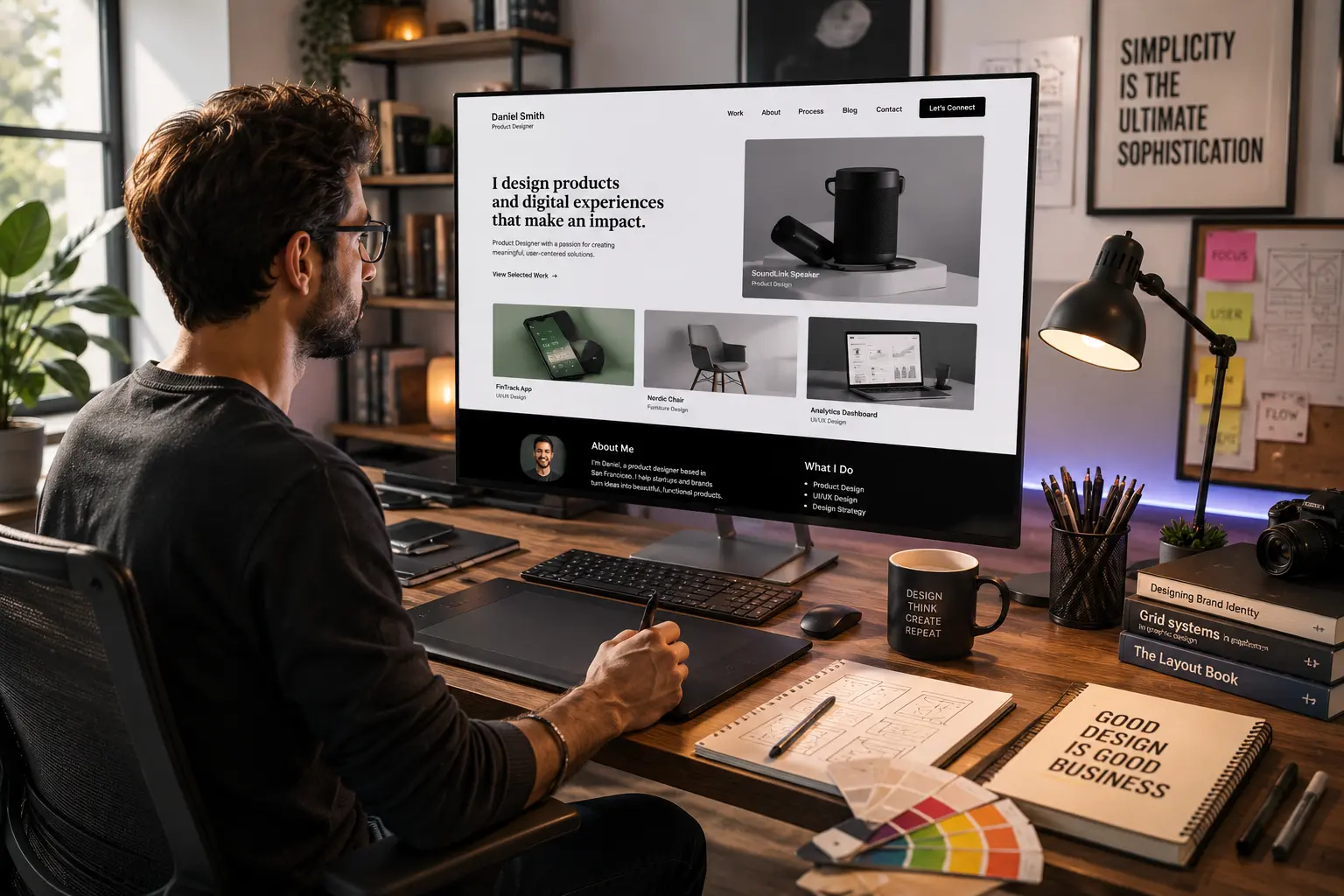
When building your online design portfolio, apply the same standards you would apply to any professional client project. That means thinking about user experience, visual hierarchy, typography, and the overall narrative your site communicates.
Your portfolio website is a direct demonstration of your capabilities. A cluttered, inconsistent, or poorly structured site tells visitors — before they have even seen a single project — that your design instincts may not be reliable. Approach it with the same intentionality and craft you would bring to your best client work. Choose a layout that reflects your personal aesthetic, ensure your navigation is intuitive, and make sure every visual decision on the site reinforces the impression you want to leave.
Tip 2: Elevate Your Presentation Beyond Exported Files
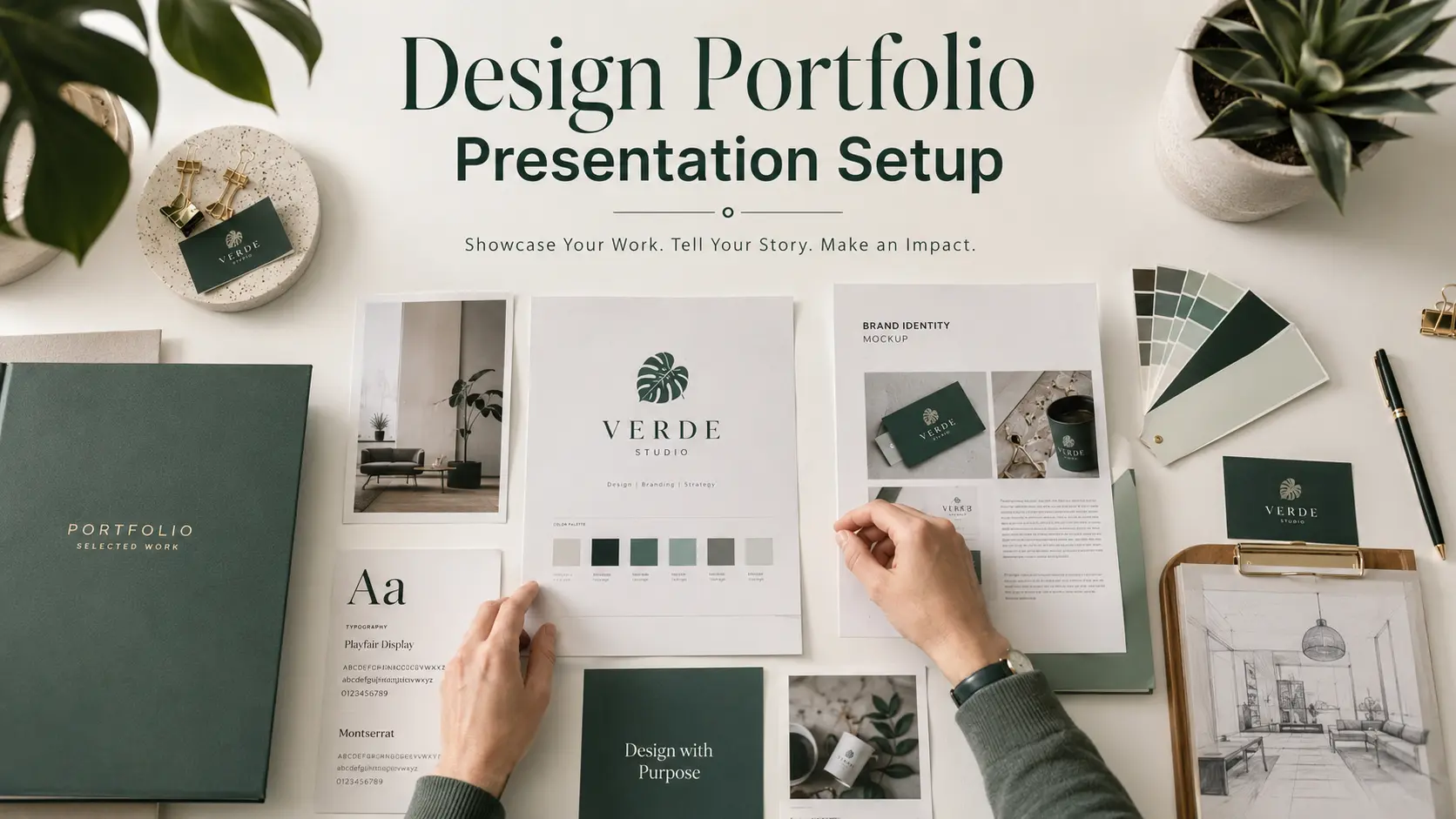
Rather than simply uploading finished files, bring your work to life with visuals that show the bigger picture. The difference between a project that impresses and one that gets ignored often comes down entirely to how it is presented.
For physical or product design work, set up a proper photoshoot. For digital design, use high-quality device mockups that place your work in a realistic context. Think carefully about your color palette, your props, and your settings. Every image in your online design portfolio should be composed with the same care as the work itself — because presentation shapes perception before content does
Tip 3: Choose Quality Over Quantity
One of the most common and damaging mistakes in online design portfolio building is trying to include everything. Most experienced hiring managers and clients would rather see six exceptional projects than twenty average ones.
Limit your portfolio to your absolute best work — typically no more than six to ten projects. This constraint actually works in your favor: it forces you to present each project thoroughly, with full context, process documentation, and clear explanations of your role and decisions. Go beyond finished pieces by building proper case studies that walk visitors through your design process from the initial brief to the final outcome. Include work-in-progress images, preliminary sketches, and decision rationale. This depth of presentation is especially valuable for UX designers but benefits every design discipline.
Tip 4: Build a Portfolio Website That Is Easy to Maintain
Your online design portfolio is a long-term asset, not a one-time project. As your skills grow, your portfolio needs to grow with you — and that means it needs to be built in a way that makes updates and revisions straightforward rather than painful.
Choose a platform or CMS that allows you to add new projects, refresh your visual style, and update your bio without rebuilding from scratch. Save your font pairings, color themes, and page layouts as reusable presets. The easier your portfolio is to maintain, the more likely you are to keep it current — and a current portfolio always outperforms a stale one. If you need help building a maintainable, professionally designed portfolio site, explore our web design and development services.
Tip 5: Never Overlook Your Written Copy
Text is just as important as visuals in an online design portfolio, and it is the element most designers underestimate or neglect. Poorly written copy — or no copy at all — undermines even the strongest visual work.
Start with the basics: your name and your design specialty should appear prominently in the top section of your homepage so that visitors immediately know who you are and what you do. For each project page, write a clear title and a concise description that explains the context, the challenge, and the reasoning behind your design decisions. Keep your writing style consistent with the overall tone of your site. And before publishing anything, proofread carefully — spelling mistakes and typos signal carelessness in a profession where attention to detail is everything.
Tip 6: Give Credit Where Credit Is Due
Collaborative work is common in design, and how you handle credit in your online design portfolio says a great deal about your professional character. Always acknowledge the contributions of colleagues, photographers, developers, or anyone else involved in a project.
List the names of collaborators on relevant project pages and add photo credits for any images you did not take yourself. If your role in a project was limited or specialized, explain what your specific contribution was rather than presenting the entire project as your own work. Far from diminishing your portfolio, this kind of transparency actually strengthens it — it shows that you are honest, self-aware, and easy to work with, which are qualities that matter enormously to clients and employers.
Tip 7: Optimize Your Online Design Portfolio for Google Search
A beautiful portfolio that no one can find is a missed opportunity. Search engine optimization (SEO) is what makes your online design portfolio discoverable to potential clients and employers who are searching for exactly the kind of designer you are.
The most important SEO practices for an online design portfolio include filling in metadata for all of your images and pages, choosing a domain name that is professional and memorable, and using strategic keywords throughout your content that accurately reflect your skills and specialization. Google's SEO Starter Guide is an excellent starting point for understanding what search engines look for. For deeper keyword research, Ahrefs' SEO basics guide covers the fundamentals clearly. A well-optimized portfolio can generate consistent inbound inquiries without any additional marketing effort on your part.
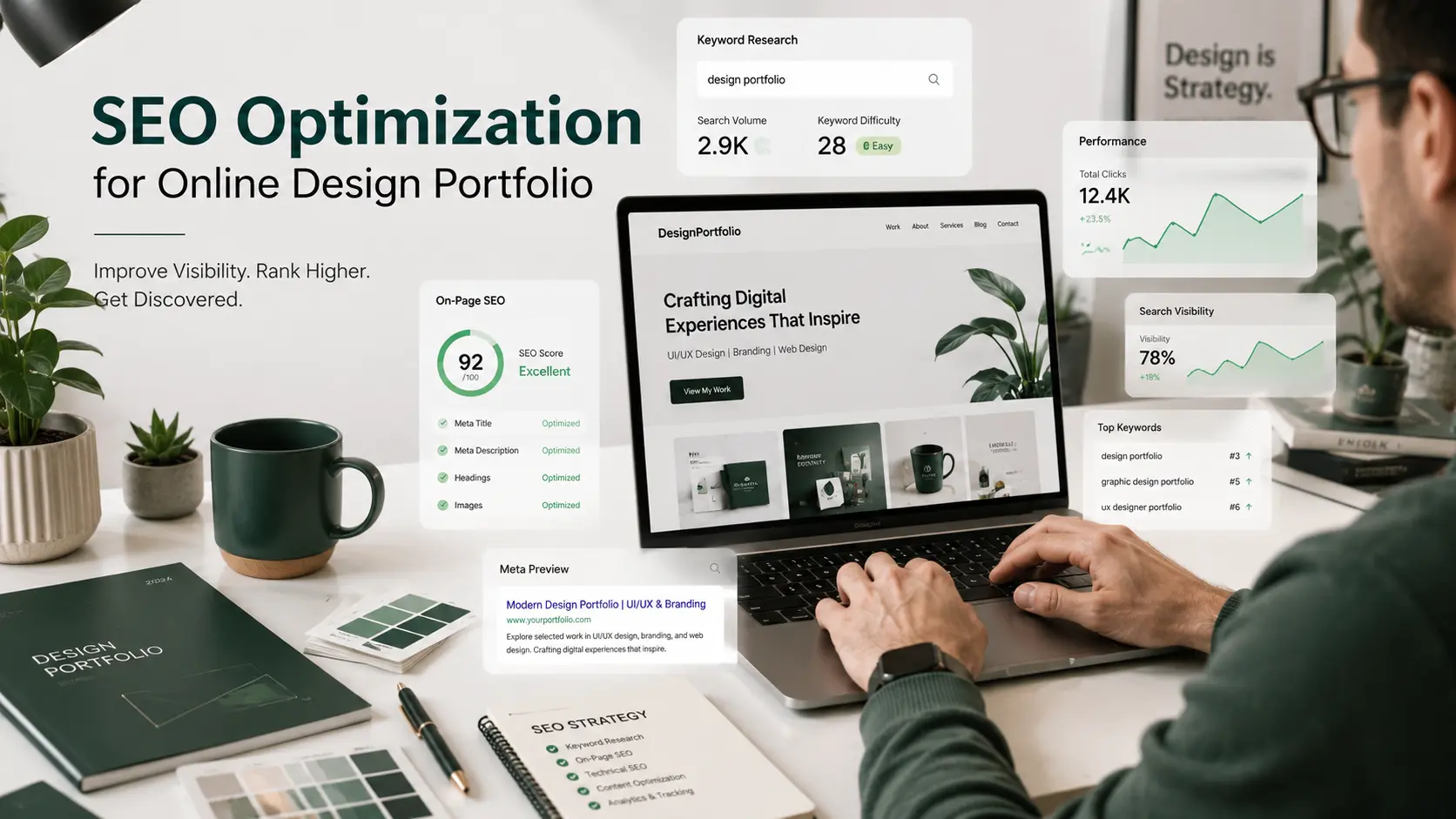
For a personalized SEO strategy tailored to your portfolio, get a free consultation from our team. You can also read our in-depth guide on SEO best practices to understand how search engines evaluate and rank content.
Frequently Asked Questions About Online Design Portfolios
Q: How many projects should I include in my online design portfolio?
A: Between six and ten projects is the recommended range. A smaller selection of exceptional, well-documented work consistently outperforms a large collection of average pieces. Quality and depth of presentation matter far more than volume.
Q: Should I include unfinished or personal projects in my online design portfolio?
A: Yes, if they demonstrate relevant skills or showcase your design process. Work-in-progress images, preliminary drafts, and personal passion projects can add valuable context to your portfolio — especially for showing how you think, not just what you produce.
Q: How often should I update my online design portfolio?
A: Review and update your portfolio at least every six months. Replace older work with stronger recent projects, refresh your bio to reflect your current skills and focus, and update any case studies that could benefit from additional context or improved presentation.
Q: Do I need a custom website for my online design portfolio, or can I use a portfolio platform? A: Both options work, but a custom-built website gives you far greater control over design, branding, and SEO. It also serves as a direct demonstration of your technical and creative capabilities — which is especially important for web and UX designers.
Q: How important is SEO for a design portfolio? A: Extremely important. Without SEO, your portfolio depends entirely on direct referrals and social media. With proper optimization, your portfolio can rank on Google for relevant searches and generate consistent inbound interest from clients and employers you have never met.
Q: Should I include client work that is under NDA in my online design portfolio?
A: If a project is covered by a non-disclosure agreement, do not include it without explicit written permission from the client. Instead, you can reference the work in general terms — noting the type of project and your role — without showing the actual deliverables.
Conclusion: Your Online Design Portfolio Is Your Most Valuable Career Asset
Building a strong online design portfolio takes deliberate effort, but the returns are significant and long-lasting. By treating your portfolio as a design project in its own right, prioritizing presentation quality, curating your best work, and optimizing for search, you create a digital asset that works for you continuously — generating opportunities even when you are not actively looking for them.
The seven principles covered in this guide are not optional extras. They are the baseline for any online design portfolio that competes seriously in today's market. Start with the areas where your current portfolio is weakest, implement improvements systematically, and commit to keeping it current as your work evolves.
Ready to build or redesign your online design portfolio with professional support?
Get Your Free Portfolio Design Consultation →
Explore Our Web Design Services →