



Published 30 Aug 2025
Training & Internship Programs
Webtricker's Training & Internship Programs pair hands-on learning across 11 tracks with real internship experience — from web development to SEO.
Explore our achievements and let yourself beconvinced!
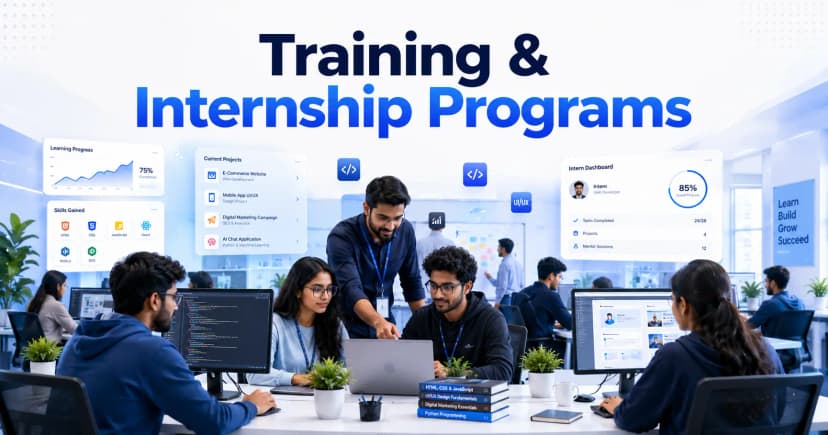
Webtricker's Training & Internship Programs pair hands-on learning across 11 tracks with real internship experience — from web development to SEO.
Training & Internship Programs
Most training programs teach you the theory and send you on your way. Webtricker does something different, it pairs hands-on training with a real internship, so you're not just learning to code, design, or market, you're doing it on live projects before you ever apply for your first job.
Quick Answer: Webtricker's Training & Internship Programs combine structured, project-based learning across web development, design, marketing, and SEO with a genuine internship component, so participants graduate with both the skills and the real-world experience employers actually screen for.
Table of Contents:
• What Is Webtricker's Training & Internship Program?
• Why Train at Webtricker Instead of Going It Alone?
• What Training Programs Does Webtricker Offer?
• How Does the Internship Component Actually Work?
• Why Choose Webtricker for Training?
• What Happens After Training Ends?
• Frequently Asked Questions
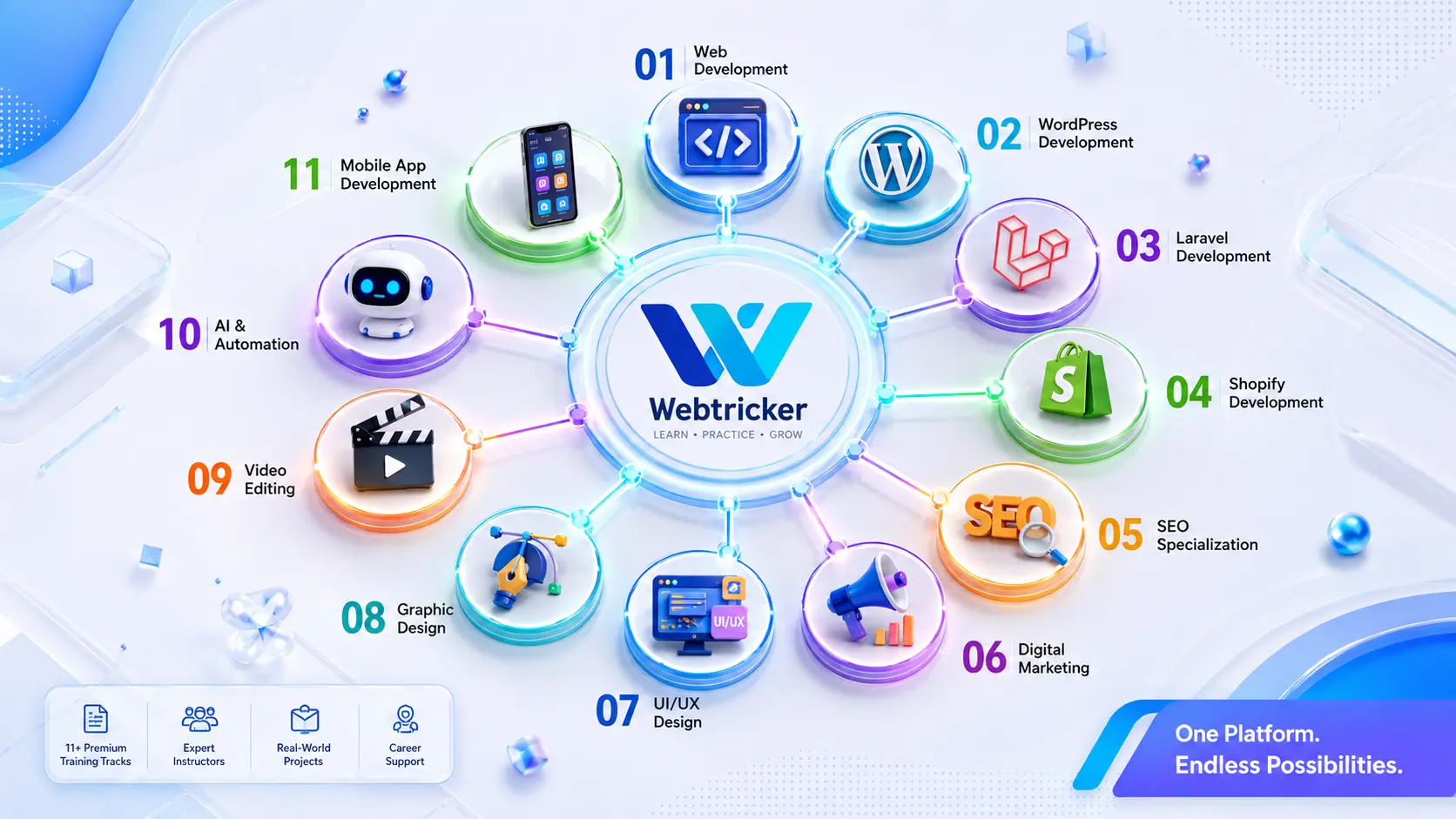
Webtricker's training tracks cover:
• Web Development Training • API Development Training • Web Application Training • MERN Stack Development • WordPress Development • Shopify Development • UI/UX Design • Mobile App Development • Social Media Marketing • Digital Marketing • SEO Development
Here's what each part of the program actually involves, and why the internship piece matters more than most training centers let on.
What Is Webtricker's Training & Internship Program?
Most courses end with a certificate and not much else. Webtricker's Training & Internship Programs are built around a different idea, that skill only really sticks when it's applied to something real.
Each track pairs structured lessons with hands-on work on live client projects, guided by working developers, designers, and marketers rather than instructors reading from a syllabus. By the time someone finishes, they've usually shipped something real, not just sat through slides about it.
This isn't a one-size-fits-all bootcamp either. Whether someone's aiming at web development, design, or digital marketing, the path adjusts to the skill and the goal, not the other way around.
Why Train at Webtricker Instead of Going It Alone?
Self-teaching can absolutely work, but it's slow, and it's easy to learn the wrong habits with nobody around to correct them. Internships close that gap, and the data backs that up.
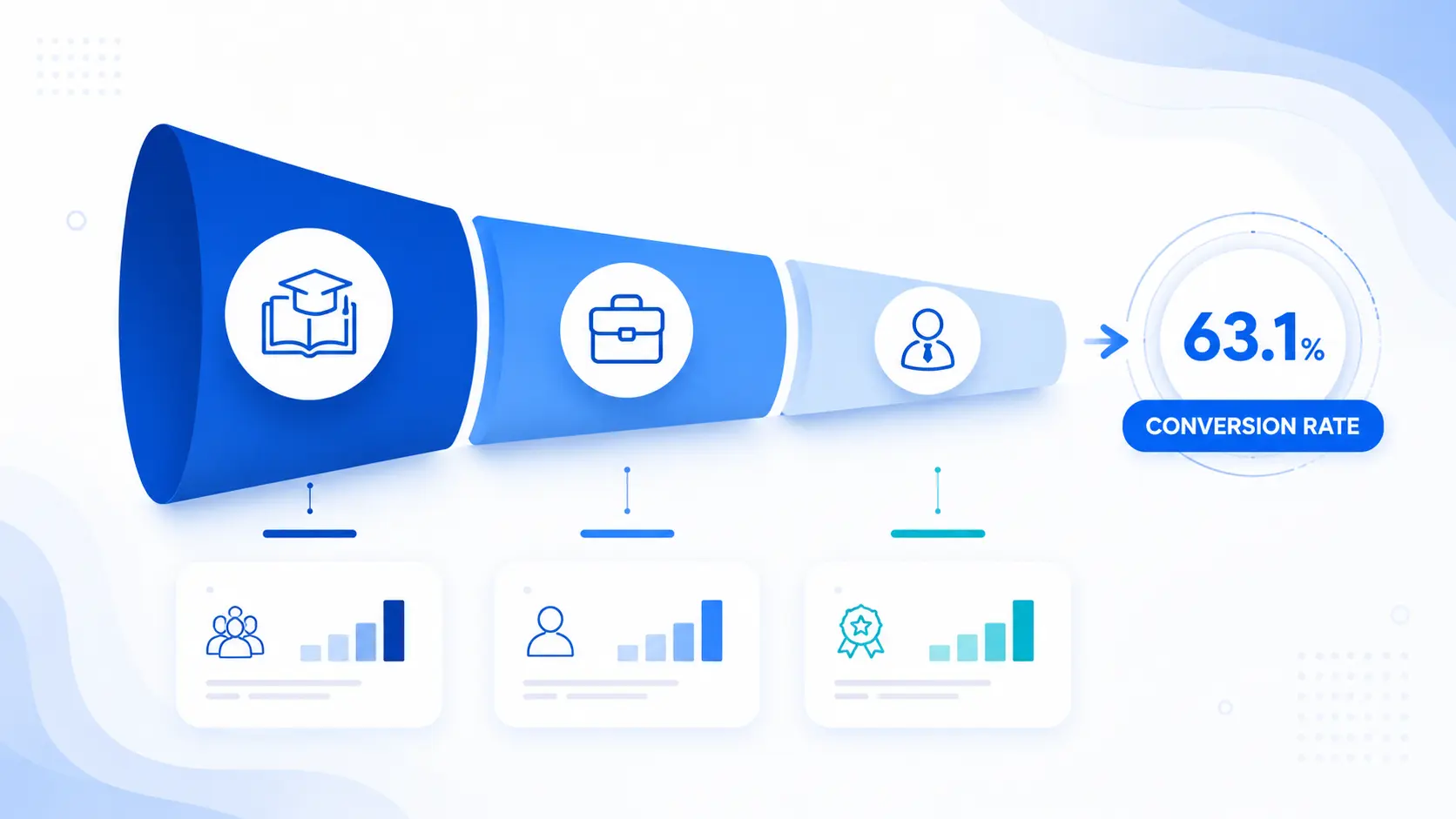
The average intern-to-full-time conversion rate climbed to 63.1 percent for 2024-25 interns, according to NACE's 2026 Internship & Co-op Report, the highest mark in five years. The acceptance rate for those offers reached 88.3 percent over the same period, and more than 70 percent of employers report they expect to maintain or increase intern hiring going forward, per NACE's internship benchmarking data.
In plain terms, an internship isn't a nice-to-have add-on to training, it's often the actual deciding factor in whether someone gets hired afterward.
What Training Programs Does Webtricker Offer?
Eleven tracks, all built the same way, structured lessons plus real project work.
Web Development Training. Covers HTML, CSS, and JavaScript fundamentals through to responsive, production-ready front-end and back-end work. API Development Training. Building RESTful and SOAP APIs that are secure, well-documented, and easy to extend, not just functional in a demo. Web Application Training. Custom web app development across the full stack, from PHP to React and Node, with a focus on real client requirements. MERN Stack Development. MongoDB, Express, React, and Node.js, learned by building actual single-page and multi-page applications, not toy projects. WordPress Development. Theme customization, plugin work, and site security, the practical side of running WordPress sites that clients depend on. Shopify Development. Custom theme builds, app integrations, and store optimization for ecommerce clients who need stores that actually convert. UI/UX Design. Wireframes, prototypes, and final designs grounded in user research, not just visual polish. Mobile App Development. Building Android and iOS apps with Kotlin, Swift, and Flutter. Social Media Marketing. Strategy, content, and paid promotion across Facebook, Instagram, Twitter, and LinkedIn, with real campaign data to learn from. Digital Marketing. SEO, PPC, content marketing, and email marketing, tied together into campaigns that have to perform, not just look good on paper. SEO Development. Keyword research, technical audits, on-page work, and link building, the same work our SEO Development services team does for clients.
How Does the Internship Component Actually Work?
This is where Webtricker's program differs most from a standard course. Interns aren't kept on toy assignments, they work directly on live projects alongside the same developers, designers, and marketers serving paying clients.
A student in the MERN track, for instance, helps build actual single-page and multi-page applications, writing real React components and Node endpoints, not recreating a tutorial from scratch. Someone in digital marketing might run analysis on a live campaign and watch their recommendations actually get tested. That kind of exposure is difficult to manufacture in a classroom.
The mentorship runs both directions too, interns get guidance from people doing the work daily, and our web development services and marketing teams get fresh perspective and extra capacity in return.
Why Choose Webtricker for Training?
A handful of things set this program apart from a typical course or bootcamp.
Curriculum that stays current. We update tracks regularly instead of teaching the same syllabus year after year regardless of what's actually being used in the industry. Real hands-on experience. Every track includes live project work, not simulated assignments built only to be graded. A genuine internship pipeline. Training feeds directly into an internship, not a vague promise of "career support" after the course ends. Mentorship from working professionals. Interns learn from people actively doing the work, not solely from instructors who left the field years ago. A track record that holds up. Webtricker has placed interns across web development, design, and marketing roles, with many staying on as the company grows.
What Happens After Training Ends?
Finishing a track is the start, not the finish line. Most graduates move into the internship phase, where the real skill-building happens, then into either a role at Webtricker or a strong portfolio and reference for applying elsewhere.
That sequence matters more than people expect. Internships give graduates exposure to industry standards and real problem-solving that a classroom alone can't replicate, and the conversion data backs that up consistently year over year.
Frequently Asked Questions
Q: Do I need prior experience to join a Webtricker training track?
A: No. Most tracks are built to take someone from the fundamentals through to job-ready skills, though some advanced tracks like MERN stack or API development assume basic programming familiarity.
Q: How long does a typical training and internship program take?
A: It varies by track, but most programs run several months, structured learning first, followed by an internship period where skills get applied to live projects.
Q: Is the internship guaranteed after training?
A: The internship is built into the program structure for eligible participants, though placement still depends on track capacity and performance during the training phase.
Q: Can I join more than one training track?
A: Yes, plenty of participants combine related tracks, like web development and UI/UX design, or digital marketing and SEO development, to round out their skill set.
Q: Does Webtricker only train for full-time hires, or can freelancers join too?
A: Both. Some participants join to build a freelance career, others are aiming for a full-time role at Webtricker or elsewhere, the training and internship structure works either way.
Q: What makes Webtricker's internship different from a typical unpaid internship?
A: Participants work on real client deliverables alongside working professionals, not isolated busywork, which is closer to what NACE's research shows actually drives conversion to a full-time offer.
Start Building Real Experience, Not Just a Certificate
A certificate proves you sat through a course. An internship proves you can actually do the work, and that's the difference employers are screening for. Webtricker's Training & Internship Programs are built to give you both, structured learning and the live project experience that backs it up.