

Published 14 Jul 2024
The Most Important Parts of SEO You Need to Get Righ
Discover the most important parts of SEO that actually move rankings. Learn which factors matter most and skip the rest. Get your free SEO audit today!
The Most Important Parts of SEO You Need to Get Right
Understanding the important parts of SEO saves you from wasting time on tactics that don't move the needle. Most businesses struggle not because they're doing everything wrong — but because they're doing too many things that barely matter.
Quick Answer: The most important parts of SEO include keyword research, on-page optimization, technical SEO, quality backlinks, and high-value content. Focusing on these core areas delivers the biggest ranking improvements while ignoring low-impact distractions.
Let's cut through the noise and focus on what actually works.
What Are the Most Important Parts of SEO?
Here's the uncomfortable truth: SEO has over 200 ranking factors, but not all of them carry equal weight. Trying to optimize for everything at once is a recipe for burnout and mediocre results.
The smart approach? Identify the important parts of SEO — the factors that drive 80% of your results — and nail those first.
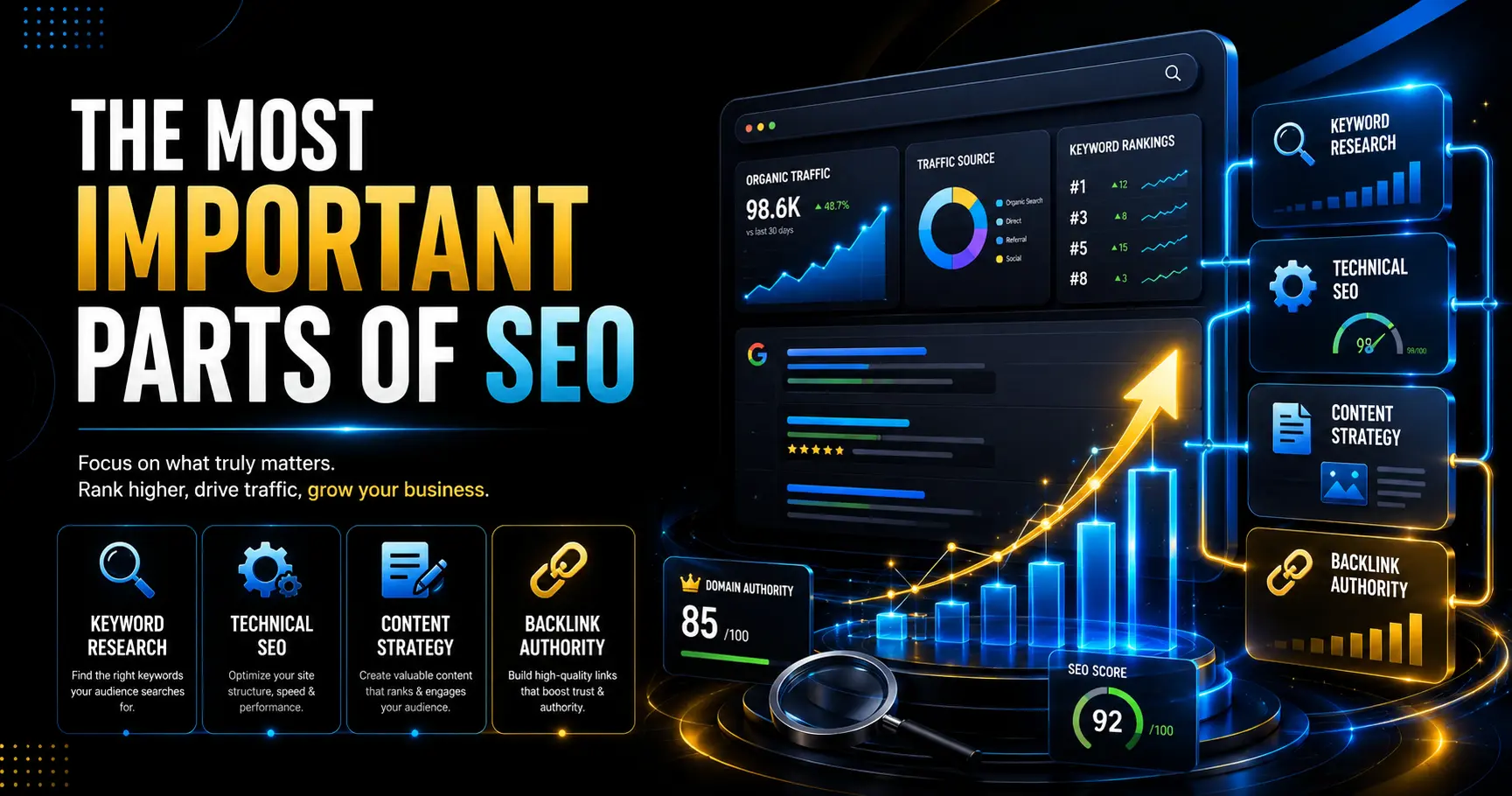
Think of it like building a house. You need a solid foundation before you worry about paint colors. The important parts of SEO are your foundation: keyword research tells you what to target, on-page optimization structures your content correctly, technical SEO ensures search engines can actually access your pages, backlinks build authority, and content gives searchers a reason to stay.
Everything else — schema markup nuances, exact keyword density percentages, image file naming conventions — matters, but only after you've locked down the fundamentals.
Google processes over 8.5 billion searches daily. The competition for visibility is intense. If you're spreading your effort across 50 minor factors instead of mastering the 5-6 that matter most, you'll lose to competitors who focused.
Why Is Keyword Research the Starting Point for SEO Success?
Keyword research isn't just a starting point — it's the compass that directs every other decision you make. Get this wrong and everything downstream suffers.
Here's what proper keyword research tells you:
What your audience actually searches for — not what you assume they search for
How much demand exists for specific topics
How competitive ranking will be for each term
What intent behind the search is — informational, navigational, or transactional
The mistake most beginners make? Targeting broad, high-competition keywords like "SEO services" when they'd get faster results from specific, lower-competition phrases like "SEO services for dental practices in Texas."
Long-tail keywords — typically three or more words — have lower search volume individually but convert at significantly higher rates because they match specific user intent. For a new or growing website, these are your fastest path to meaningful traffic.
Use tools like Google Keyword Planner, Ahrefs, or SEMrush to find keywords with decent search volume and manageable competition. Then map those keywords to specific pages on your site — one primary keyword per page.
How Does On-Page SEO Directly Impact Your Rankings?
On-page optimization is where you have the most direct control. These are the elements you can change today and see improvements relatively quickly.
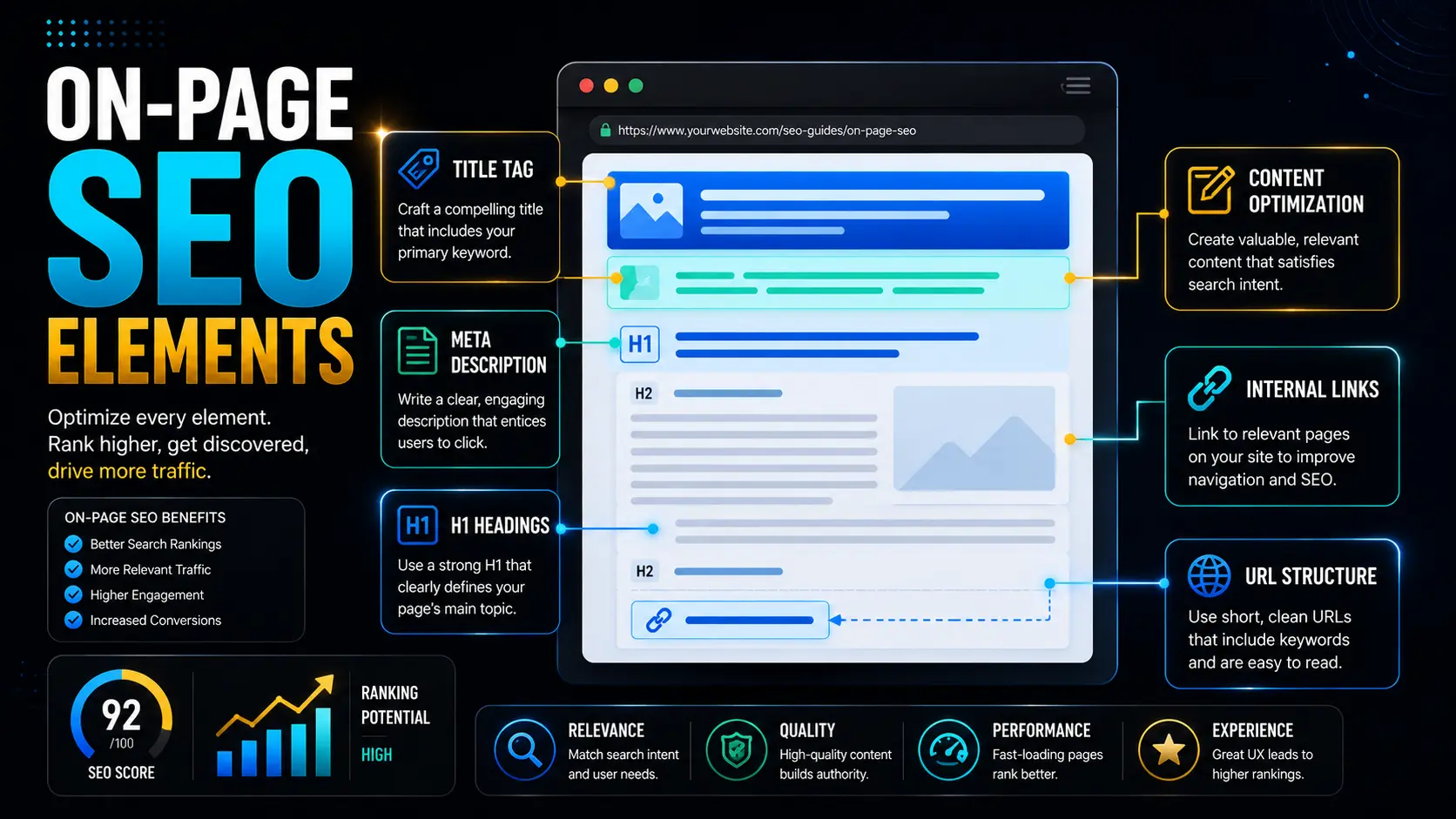
The important parts of on-page SEO include:
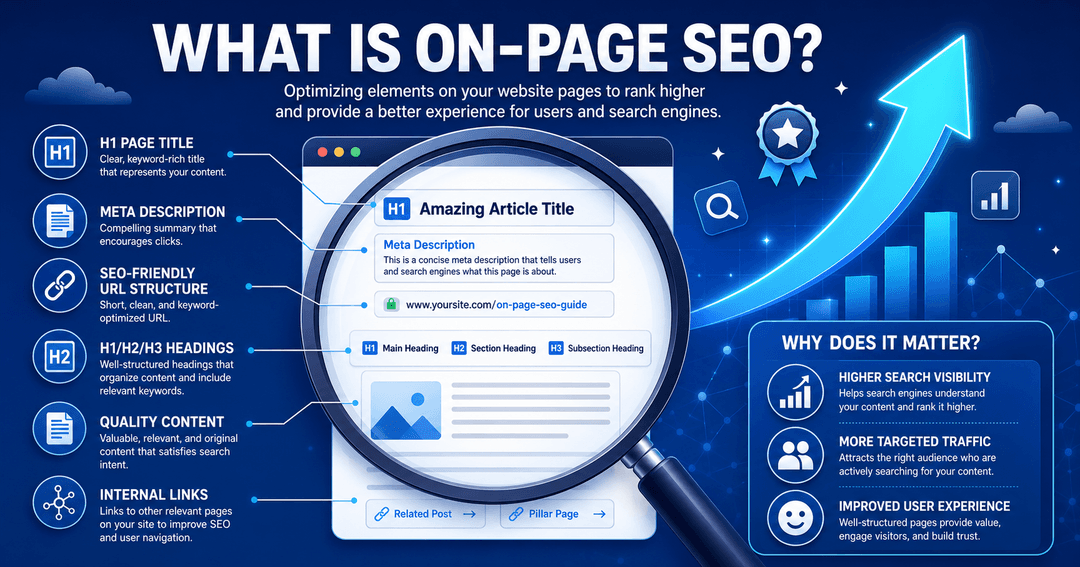
Title tags: Keep them under 60 characters. Include your target keyword. Make them compelling — this is often the first thing searchers see in results.
Meta descriptions: Under 160 characters. Include the keyword naturally. End with a reason to click — a benefit, a solution, or urgency.
Heading structure: One H1 per page. Use H2s and H3s to organize content logically. This helps both users scan your content and search engines understand its structure.
URL structure: Short, descriptive, hyphen-separated. A URL like "/seo-audit-checklist" tells both users and bots what the page is about.
Internal linking: Connect related pages on your site. This distributes page authority, helps search engines discover content, and keeps visitors exploring longer.
Content optimization: Naturally include your target keyword and related terms. But don't force it — write for humans first.
53% of all website traffic comes from organic search. On-page optimization is your direct lever to capture more of that traffic. Every well-optimized page is another entry point for potential customers.
Why Is Technical SEO a Make-or-Break Factor?
You can create the best content in your industry, but if search engines can't crawl it, index it, or load it quickly, it's invisible. That's why technical SEO ranks among the most critical parts of SEO.
Here are the technical elements that matter most:
Page speed: 53% of mobile users abandon sites that take longer than 3 seconds to load. Google has confirmed speed as a ranking factor. Use tools like Google PageSpeed Insights to identify and fix bottlenecks.
Mobile-friendliness: Google uses mobile-first indexing — it evaluates the mobile version of your site for rankings. If your site isn't responsive, you're fighting with one hand tied behind your back.
Crawlability: Ensure search bots can access all important pages. Fix broken links, avoid unnecessary redirects, and don't block important content in your robots.txt file.
XML sitemap: Submit a clean sitemap through Google Search Console to help search engines discover and prioritize your pages.
HTTPS: Secure sites are a ranking signal. If you're still on HTTP, migrating to HTTPS should be a priority.
Structured data: Schema markup helps search engines understand your content context and can earn you rich snippets — those enhanced results with stars, FAQs, or other visual elements that stand out in search results.
Technical issues compound over time. A few broken links here, a slow page there — individually they seem minor, but together they create friction that hurts your entire site's performance. If technical SEO feels overwhelming, partnering with professional SEO services can get your foundation solid quickly.
Why Are Backlinks Among the Most Important Parts of SEO?
Backlinks remain one of the strongest ranking signals. When a reputable website links to yours, it's essentially telling Google: "This content is valuable and trustworthy."
But here's where most people get it wrong: they focus on quantity over quality.
One link from a high-authority site in your industry is worth more than 100 links from random directories or spammy blogs. Google's algorithms have gotten sophisticated at evaluating link quality.
Backlink strategies that actually work:
Guest posting on reputable sites in your niche with natural, contextual links
Creating original research or data that others want to cite
Building relationships with journalists and bloggers who cover your industry
Creating shareable content like infographics, tools, or comprehensive guides
Avoid black hat tactics — buying links, participating in link farms, or using private blog networks. The short-term gains aren't worth the penalty risk. Recovering from a Google penalty can take months or even years.
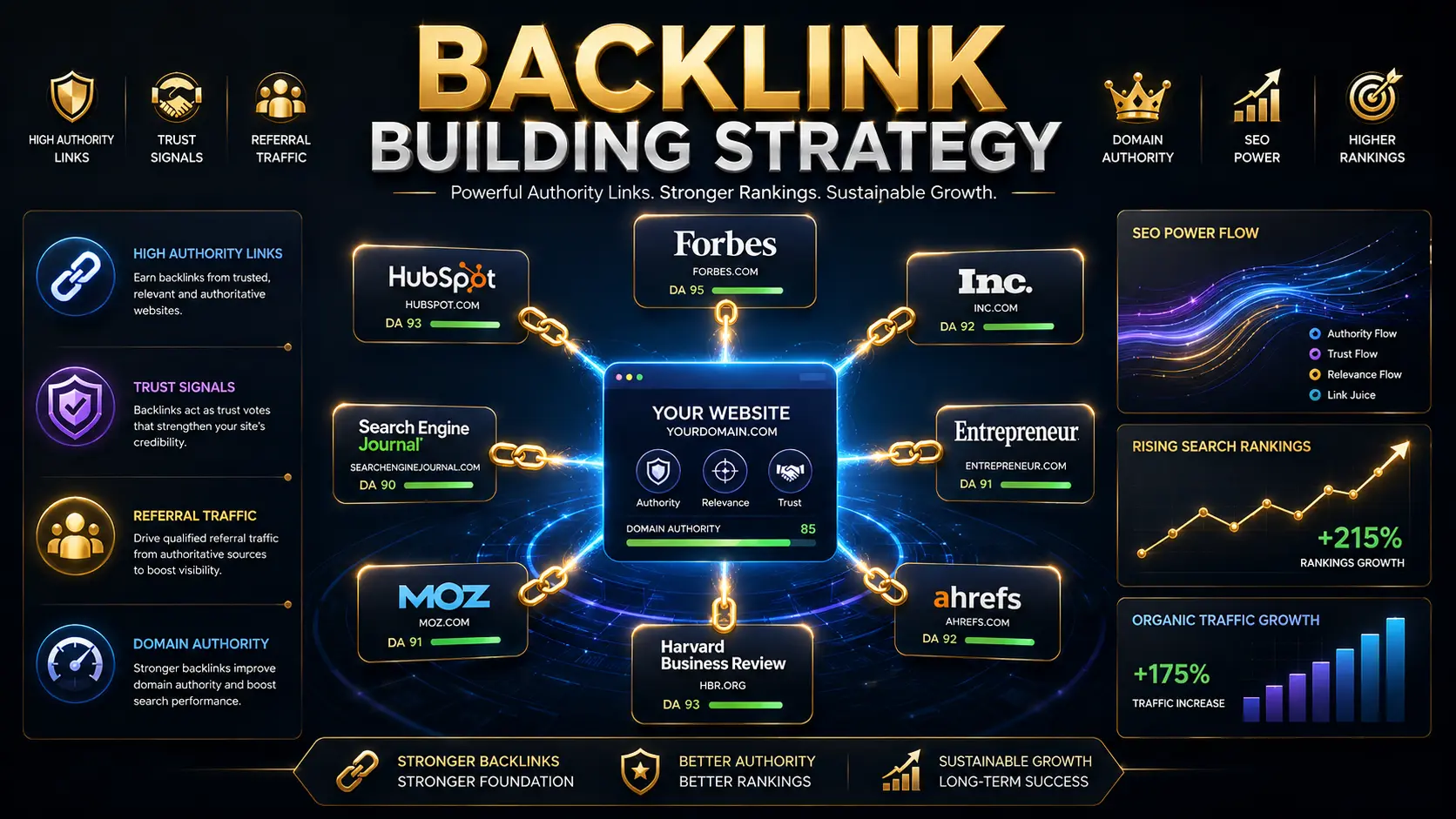
Backlinks don't just improve rankings — they drive referral traffic and introduce your brand to new audiences. They're a multiplier for every other SEO effort you make.
How Does Content Quality Affect Your Search Rankings?
Content is what searchers actually consume. Everything else — keywords, technical optimization, backlinks — exists to help people find and access your content. If the content itself doesn't deliver value, the rest doesn't matter.
75% of users never scroll past the first page of search results. The pages that earn those top spots consistently share these traits:
They answer the question completely. Search engines reward comprehensiveness. If someone searches "how to do keyword research," they don't want a 300-word overview — they want actionable steps, examples, and tool recommendations.
They match search intent. Understand whether searchers want information, a specific page, or to make a purchase. Your content should align with what they're actually looking for.
They're better than what's already ranking. Look at the top results for your target keyword. What do they cover? What do they miss? Create something that goes deeper, offers fresh perspectives, or presents information more clearly.
They stay fresh. Outdated content loses rankings over time. Set a schedule to review and update your most important pages regularly.
They're readable. Short paragraphs, clear headings, bullet points, and conversational language keep people engaged. If visitors bounce after 10 seconds because your content is a wall of text, search engines notice.
Content quality isn't about word count — it's about value per word. A tightly written 1,500-word guide that answers every question beats a fluffy 3,000-word post that pads the same points repeatedly.
Frequently Asked Questions
What are the most important parts of SEO for beginners?
Start with keyword research, on-page optimization, and creating quality content. These three areas give you the biggest return on time invested. Add technical SEO and link building as your foundation solidifies.
How long does it take to see results from SEO?
Most businesses see meaningful improvements within 3-6 months of consistent effort. Competitive keywords may take longer. SEO is a long-term investment, not an overnight solution.
Is technical SEO really that important?
Yes. If search engines can't crawl, index, or quickly load your pages, even the best content won't rank. Technical SEO is the foundation everything else builds on.
How many backlinks do I need to rank?
There's no magic number. Quality matters far more than quantity. A few links from authoritative, relevant sites can outperform hundreds of low-quality links.
Should I focus on SEO or paid advertising?
Both serve different purposes. SEO builds sustainable organic traffic over time, while paid ads deliver immediate visibility. Most successful businesses use both strategically based on their goals and budget.
What's the biggest SEO mistake to avoid?
Ignoring search intent. Optimizing for keywords without understanding what searchers actually want leads to content that ranks poorly and converts worse.
Focus on What Matters and Skip the Rest
The important parts of SEO aren't complicated — but they require consistency and patience. Keyword research tells you where to aim. On-page optimization structures your content for success. Technical SEO ensures search engines can find and serve your pages. Backlinks build the authority that separates contenders from leaders. Content delivers the value that keeps visitors engaged and coming back.
Stop chasing every new tactic or minor ranking factor. Master these core areas first. Track your progress. Refine your approach based on data. The businesses that win at SEO aren't the ones doing the most things — they're the ones doing the right things consistently.
Ready to focus your SEO efforts where they'll have the biggest impact?