

Published 24 Jul 2024
Essential Elements of Effective Ecommerce Website Design
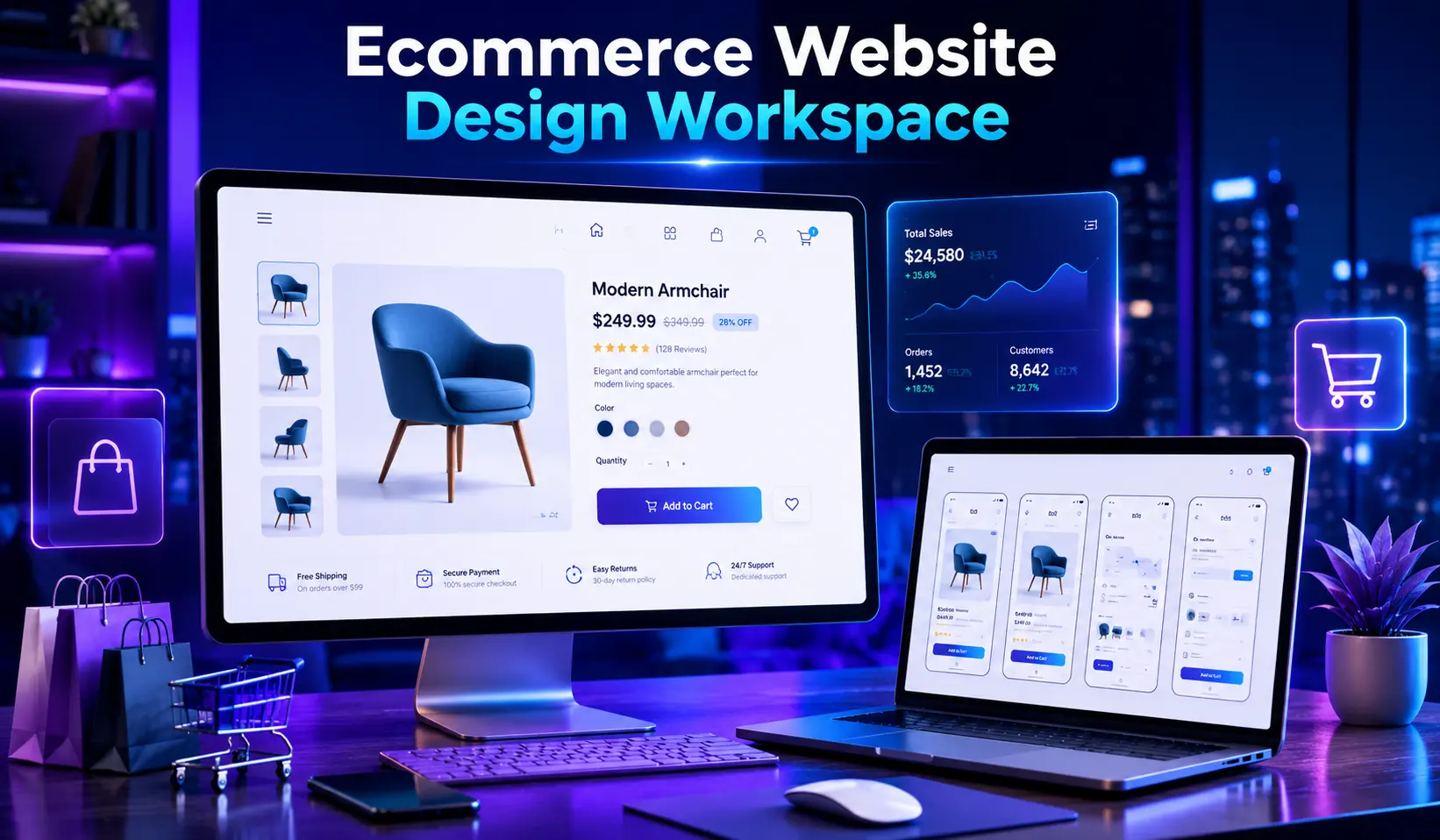
Discover the essential elements of effective ecommerce website design that build trust and drive conversions. Get your free design quote today.
Essential Elements of Effective Ecommerce Website Design
An ecommerce website is far more than an online catalog — it's a sales engine that has to build trust and guide a purchase within seconds. This guide breaks down the elements of ecommerce website design that actually move the needle on conversions, from mobile architecture to checkout flow.
Quick Answer: Effective ecommerce website design combines a mobile-first layout, frictionless navigation with smart search and filtering, strong visual storytelling through quality product imagery and video, visible trust signals like reviews and security badges, and a simplified checkout funnel with minimal distractions. Each element works toward the same goal: removing friction between a visitor's interest and their completed purchase.
A well-designed store doesn't just look polished — it feels intuitive. It eliminates friction, anticipates what a visitor needs next, and provides a seamless path from the first click to the confirmation email. The sections below cover what that actually looks like in practice.
What Makes Mobile-First Architecture Essential for Ecommerce Website Design?
Mobile devices account for the large majority of global ecommerce traffic today, which means a site that's merely "responsive" rather than genuinely mobile-first is already behind.
Thumb-driven design keeps every call-to-action button reachable with a single thumb, with "Add to Cart" and "Checkout" buttons placed in the center or bottom of the screen rather than tucked somewhere a one-handed grip can't easily reach.
Speed optimization matters more on mobile than almost anywhere else. A one-second delay in load time has been linked to roughly a 7% drop in conversions in widely cited mobile UX research — compressing images to WebP, using lazy loading, and trimming heavy scripts all help keep that delay from happening in the first place.
Simplified forms account for how clumsy typing on a mobile keyboard actually is. Auto-fill support and keeping checkout fields to an absolute minimum reduce the friction that causes abandoned carts on small screens specifically.

How Does Frictionless Navigation Improve Ecommerce Website Design?
The search bar is arguably the most important feature on a site for high-intent shoppers — if they can't find it quickly, they generally won't buy.
Predictive search that suggests products, categories, or recent searches as soon as someone starts typing shortens the path between intent and a found product meaningfully.
Hierarchical menus using intuitive mega-menus that group products by category or collection keep the top-level navigation from overwhelming a visitor with too many choices at once.
Smart filtering by price, rating, size, and brand lets shoppers narrow results quickly — the more granular the filtering options, the faster someone can actually make a decision instead of scrolling endlessly. Getting this right is a recurring theme across the ecommerce projects our team builds, since poor filtering is one of the most common, fixable reasons a store with good products still underperforms on conversion.
Why Does Visual Storytelling Matter in Ecommerce Website Design?
Online shoppers can't physically touch a product before buying, and good ecommerce website design has to compensate for that missing tactile experience.
High-fidelity imagery — ideally five to seven images per product from multiple angles, with zoom functionality so customers can actually see texture and material — does a lot of the work that touching a product in person would otherwise do.
Lifestyle photography that shows a product in actual use creates a stronger emotional connection than a flat product shot alone. A garment on a model in a real setting tends to perform better than the same garment on a plain hanger.
Short-form product video has a measurable impact: ecommerce product pages with video have been found to convert up to 80% better than pages without video, according to research compiled by Invesp's analysis of ecommerce video data. Even a brief 15-30 second demo embedded on a product page can meaningfully shift conversion numbers.
What Trust Signals Does Effective Ecommerce Website Design Need?
Trust is the real currency of online retail. The moment a visitor feels even slight hesitation about a site's security or legitimacy, they tend to leave rather than push through the doubt.
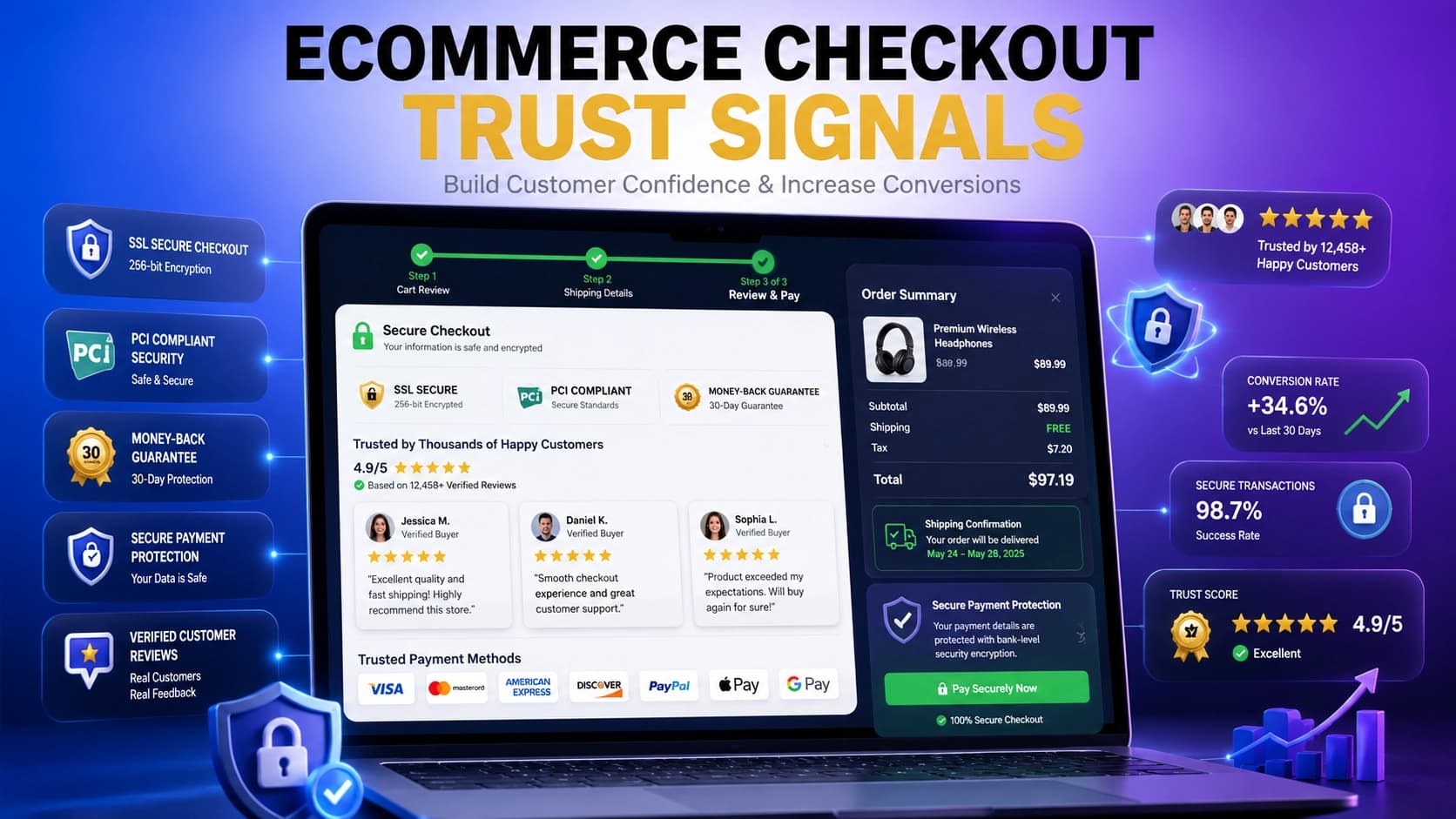
Social proof — star ratings and customer reviews placed directly under the product title — carries more weight than almost any marketing copy a brand could write itself.
Secure payment badges, clearly displaying SSL, Visa, Mastercard, PayPal, and relevant local payment gateway icons, signal legitimacy at a glance before a visitor even reaches checkout.
Transparent policies, particularly an easy-to-find "Returns and Refunds" link in the footer, reduce hesitation. Hiding that information, intentionally or not, tends to create exactly the suspicion good ecommerce website design is supposed to avoid. The same logic applies to shipping costs and timelines — surprises at checkout are one of the most common reasons a near-complete purchase gets abandoned at the last step.
How Should You Design a High-Conversion Ecommerce Checkout Funnel?
The checkout process is where most ecommerce sales are lost, and a cluttered checkout is one of the most preventable causes of abandoned revenue.
Guest checkout should always be available. Forcing a new customer to create an account before buying adds friction at the exact moment a brand needs the least friction possible — account creation can always be offered after the purchase completes instead.
Progress indicators, a simple visual bar showing stages like Shipping, Payment, and Review, tell a visitor exactly how many steps remain, which reduces the uncertainty that often leads to abandonment partway through.
Minimized distractions — removing main site navigation and footer links from the checkout page itself — keep a visitor focused on finishing the purchase rather than wandering back into the rest of the site mid-transaction.
How Does Ecommerce Website Design Affect SEO?
Design and SEO aren't separate concerns for an ecommerce site. Google's Core Web Vitals directly factor page experience into rankings, so sites that load slowly, have poor mobile layouts, or carry high bounce rates tend to get penalized in search results regardless of how good the product catalog itself is.
This connection runs both ways in practice: a faster, better-structured store tends to rank better, and a store that ranks well but converts poorly because of weak design is still leaving revenue on the table either way. Teams unsure where their own store stands on either front can request a combined design and performance review rather than guessing at which side of the problem to fix first.
Frequently Asked Questions About Ecommerce Website Design
Does ecommerce website design really impact SEO rankings?
A: Yes. Google's Core Web Vitals prioritize page experience directly, so slow load times, poor mobile layouts, or high bounce rates can hurt search rankings even when the underlying products and content are strong. This is one reason design and SEO teams need to coordinate rather than work in isolation on an ecommerce project.
Should an ecommerce site use a live chat bot?
A: A live chat option staffed by an actual human tends to perform better than a generic, looping bot, particularly for higher-value purchases where shoppers want a real answer before committing. If AI-driven chat is used, it should genuinely help and offer a quick path to a real support person rather than trapping visitors in a script that can't resolve their actual question.
What's the biggest mistake in modern ecommerce website design?
A: Prioritizing flashy animations over functionality. If an animation delays a visitor's ability to click "Add to Cart" or slows page load, it's costing more in conversions than it's adding in visual appeal.
How many product images does a typical product page need?
A: Five to seven images from different angles, ideally with zoom functionality, tends to give shoppers enough visual information to feel confident about a purchase without touching the product themselves.
Is guest checkout really necessary, or is account creation fine? Guest checkout should always be available as an option. Forcing account creation before purchase is one of the more common, avoidable causes of cart abandonment, and accounts can be offered after the sale completes instead.
How much does product video actually affect ecommerce conversions?
A: Research has found ecommerce product pages with video can convert up to 80% better than pages without it, making video one of the higher-impact additions a product page can get relative to its production cost.
What Ties Effective Ecommerce Website Design Together?
Effective ecommerce website design is a continuous process of testing, learning, and refining rather than a one-time project. Prioritizing mobile performance, building real trust signals, and simplifying the user journey doesn't just create a nicer-looking website — it builds something closer to an automated sales system. The stores that consistently convert well are the ones that respect a visitor's time at every single step, not just on the homepage.
Auditing checkout flow, mobile speed, and trust signals before sales start slipping tends to pay off far more than waiting for a drop in revenue to force the issue.
Get Your Custom Ecommerce Design Strategy
Browse Our Web Design Services